 Blog commenting is a vastly underrated part of your blog marketing campaign, and one that you need to draw closer to in the coming months. When you have a firm grasp on your commenting systems and policies, more people will begin to comment and share on your posts than ever before. Today I’m giving you [...]]]>
Courtesy of bluemoonstudio.org
What is Blog Commenting?
Contrary to popular belief, blog commenting is not simply ‘commenting on a blog.’ There is a complex system that goes into creating a commenting strategy – that will help your blog build a readership, gain long term fans and really engage your readers in conversation. As you know, the more engaged people are on your blog – the higher your chances are of selling them one of your products.
So, blog commenting is actually the process that you use to improve blog engagement, increase earning potential and grow your fan base.
If you don’t have any sort of blog commenting strategy – you are not alone. It’s supposed to be an essential feature of your blog outreach program, and a central part of your sites search engine optimization techniques.
Blog Commenting is a 2 Way Street
There are 2 kinds of blog commenting that you should integrate into your daily social media marketing tactics. I like to call these on-site commenting, and off-site commenting. If you can master these basic forms of communication you can achieve these improvements:
• More readers commenting on your posts
• More social media shares for your posts on Facebook, Twitter and Pinterest
• Less spam, and fewer unwanted viruses
• More traffic on your site
• More leads for business partnerships
• Greater viral potential for blog posts
Onsite Blog Commenting Strategy
An onsite blog commenting strategy involves how you decide to moderate the comments that your readers leave on your posts. It also involves how you can or can’t reply to your readers. Here is a detailed strategy summary of your average onsite commenting policy.

Courtesy of gona-fsd.blogspot.com
#1: Learn What Is Real and What is Fake
People will comment on your blog for more than one reason. Most of the time, they are doing it to establish a link on your website. When they are able to publish a link on your blog, via a comment – it gives their linked website extra link juice from yours.
Practice: Only publish authentic comments from real people. Do not publish junk links or spam comments – ever. Publish links if the commenter has taken the time to add something valuable to your blog discussion.
#2: How To Spot Spam Comments
You will receive a lot of spam comments on your blog, because of black hat SEO firms. For some reason, ignorant people still think this blog commenting method works. These are standard, pointless messages meant to be mass distributed to hundreds of blogs. Don’t publish them, or you will get huge amounts of spam on your blog.
• Spam comments usually contain poor English
• They have poor grammar and spelling
• They don’t make sense when read, as programs create them
• They are mystically general
• They are over-flattering
• They have words that are used out of context
• They ask non-related questions on your blog post
A few to watch out for:
“Great post! I has my wife to thank for this new business blog which information you have shared with me! I am forever in your debt.”
“This is an awesome post. I’ve seen some truly great posts on {insert blog subject} but yours is clearly better than all the rest! What a brilliant writer you must be!”
“Thank you for this information. I used it to start my company and because of you, I now have a company that earns lots of money.”
“I found your blog via Google, and I’ve subscribed to your feed and social media pages. You really helped connect the dots.”
“Service x is good, but I personally use service Y more often” – [email protected]
Practice: To prevent spam here are some good rules to live by. If it sounds like spam, it is spam. If it’s not English, you don’t want it on your blog anyway. If the product suggested matches the guys email address, it’s spam. If you copy and paste the blog comment into Google, and it comes up on 100 other blogs, it’s spam.
#3: Having Publishing Rules
All blog commenting strategies need publishing rules. Simple rules like ‘no profanity’ are common. Mention in your blog commenting section that reader’s comments are subject to moderation and won’t be published if they violate any of your rules.

Courtesy of blog.hostbaby.com
• Do not troll on your blog
• Do not pick fights or defame people on your blog
• Do not publish affiliate marketing links on the blog
• Do not publish spam comments on the blog
• Do not use inflammatory language on the blog
You can really make up whatever rules you like. When you have a blog commenting tab or link, you can refer readers there that repeatedly ask why their comments are appearing. Then you can simply state that they have violated your terms of use.
#4: Responding To Readers
It helps if you call them by name, or use a plugin like Disqus that identifies who you are talking to. All reader responses should be amiable, friendly and encourage future reading. There are a number of ways you can do this, but it all comes down to your writing style and theme of your blog. Everyone will have different rules.
Practice: Answer all legitimate questions that your readers ask. If they mention you in one of their posts, visit their blog and comment on that post.
Offsite Blog Commenting System
An offsite blog commenting strategy involves attracting traffic, readers and leads to your blog in a non-spammy way – by commenting on other people’s blogs. Blog comments should always be authentic and never mass produced. You will get a horrible reputation if you don’t keep your voice intact.
#1: Find a Few Blogs Everyday To Comment On
If you comment on a few top ranking blogs every day, by month 3 you will have built up a nice little network of backlinks. Only include your link in the space they leave for your website address. If you’re going to include it in the body of your comment, make your comment engaging, interesting and add to the social discussion.
Practice: Find some great new blogs to comment on by using bookmarking services like Google RSS, StumbleUpon, Digg, Reddit and Delicious.
#2: Use Keywords in Your Comments
I like to use keywords in any comments I leave on other sites. Usually, I check to see if the post itself has any strong keywords I can use. If it does, I integrate these naturally into the comment, which actually improves the blogger’s overall page SEO. They appreciate it, and your link ranks better along with their post.
Practice: If you use Google Chrome, click on ‘tools’ and ‘view source’ in your toolbar to see if the blog post has any obvious SEO. Support it by optimizing your comment for the blogger. Don’t overdo it, just be supportive.
#3: Use Links That Can Be Tracked
It’s super easy to go out into the world and leave a million links on a huge variety of blogs. But what happens when Google updates again, and starts penalizing you for leaving links on poor quality sites? Suddenly your link juice drops. You should never apply your blog commenting strategy to poor quality blogs, but that isn’t the point.
Blogs can become defunct, or forgotten and your links devalued. Always use a trackable link system so that you can check your link networks every now and then. Then, you can remove broken links and comment when you need to, which is great for maintaining SEO.
Practice: Register with a link service like Bit.ly and run all your links through this system. Blog commenting will become so much easier when you use technology to manage large volumes of content that you’ve published online.
#4: Say Something Worth Saying
As a rule, blog commenting is also a strategic marketing tool. If you put out a really good argument or comment, people will
directly click on your link to find out who you are. So, you’re looking for referral traffic as well. Make your comment so good that other people will want to become a fan of yours.
Practice: Always add new dimensions to the argument. Blog commenting is about attraction, so invite conversation with ‘content bait’ comments.
#5: Impress The Blogger
Another goal for your blog commenting system, is to impress the blogger that you’re talking to. They are going to read your blog and decide whether it’s worth publishing. They are also going to reply to you based on what you say. Comments can be closed, or open-ended. If you want to establish a relationship with the blogger, leave yours open. Start a discussion!
Practice: Always edit your blog comments before you publish them. Check them for correct grammar, spelling and language. Adhere to the blog’s rules. Impress the blogger by actually showing up on their Facebook, Twitter and Pinterest pages.
A Few Extra Rules To Live By
Blog commenting can be a very rewarding marketing tool if you stick to the basic social principles of authenticity. Be yourself, not a robot. Say something great, don’t just prattle on to get your link. More and more, I’m seeing bloggers delete comments from real people, because these people are not trying hard enough.
• Bloggers can receive hundreds of spam comments every day.
• Bloggers aren’t impressed by ‘thank you’ and ‘you’re great’ comments
• Bloggers like people that understand the rules of blog commenting
• Bloggers appreciate correct SEO practices
• Bloggers like it when you are a genuine fan of theirs
The 10 Rules I Adhere To:

Courtesy of empowernetwork.com
#1: Before blog commenting for the first time, find out what the bloggers name is. Use it in your comment, and stick to the title subject. If the blog is about rabbits, don’t go on and on about ducks.
#2: Jump into a conversation. Read the other comments and see if you can’t add something really special to the discussion. The blogger will love it.
#3: If you want to get to know the blogger, actually READ the posts. Skimming won’t do, and it’s a poor practice. Read, compute, comment. That’s how it’s done.
#4: A good comment is a little bit longer than a tweet, but no more. In extreme cases, you can post a long comment – but it’s a hassle to read for the blogger. Email them instead.
#5: Never, I mean never link more than once in a comment. This proves instantly to the blogger that you are a massive spammer.
#6: Blog commenting is about being real. Use your real business, your real name, your real photo. People want to know who they are talking to – so be real!
#7: Suck up in the right manner by promoting your comment and the blogger’s post on your social network. “I just X here, and commented – check it out {add link}.”
#8: If the commenting system allows for editing and html use it. Make your comment look good, so that the blogger’s page looks nice. It’s just good manners.
#9: Never use a company or product name in the ‘name’ area. As I mentioned before, blog commenting is not about blatant promotion, it’s about respect and authenticity.
#10: Meet new fans on other people’s blogs. Chat to people using commenting systems – it takes longer yes, but it proves that you are active online. Then you can invite your new fans over to your blog to gain some additional readers.
This has been my all-in-one post on blog commenting. I hope this answers all the questions you have on how to do it, but if it doesn’t then shoot me a comment here.
Is there anything else about blog commenting you don’t understand?
]]> Medium is the brain-child of Twitter founders Evan Williams and Biz Stone, but what is it exactly, and can it hope to compete in an ever flooded blogging market? These questions and more are answered in today’s post on Medium: The new blogging super-platform. 1. Why Even Create Medium? Medium was created to better connect [...]]]>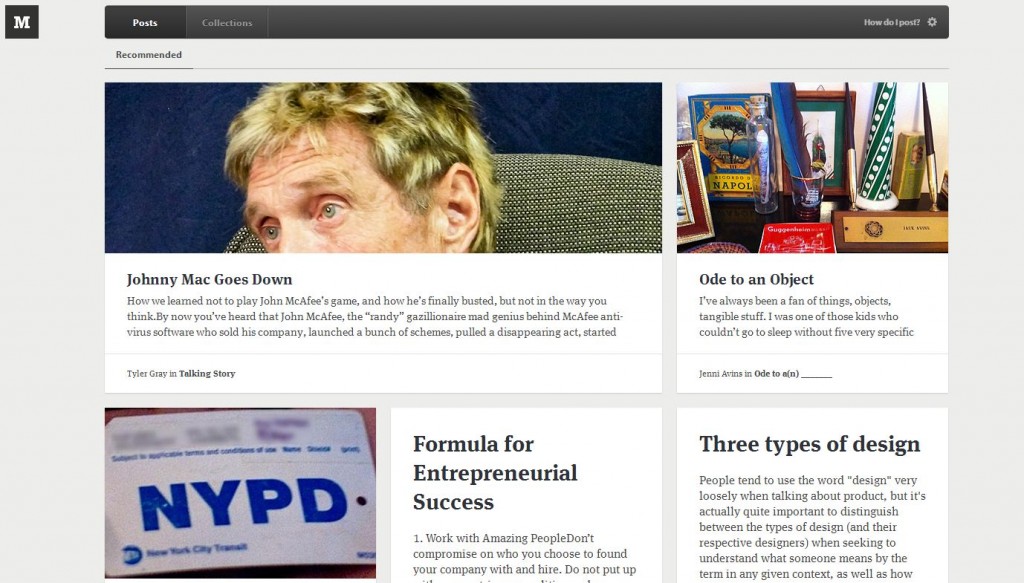
Courtesy of medium.com
1. Why Even Create Medium?
Medium was created to better connect internet users to certain types of media. The Twitter creators are trying to create a platform that declutters the internet and creates a ‘creative’ space for content producers to work in.
2. Why Haven’t We Heard of Medium Before Now?
Medium is still in beta-phase, and as you know launching a social media site prematurely can mean disaster for the Twitter creators. You can however sign up to check it out, right here at medium.com
3. SMMU Likes It So Far!
With a Pinterest-like front page and beautifully elegant interior pages that make reading a dream, the design is looking good.
4. Categories or Blogging Boards
From what we can see, Medium allows you to join ‘boards’ on subjects that you like to blog about. Then you get to read all the nutritious stuff in there you enjoy, and get great comments and shares from people who also enjoy your topic. Very smart.
Courtesy of medium.com
5. A Blog Platform Storybook
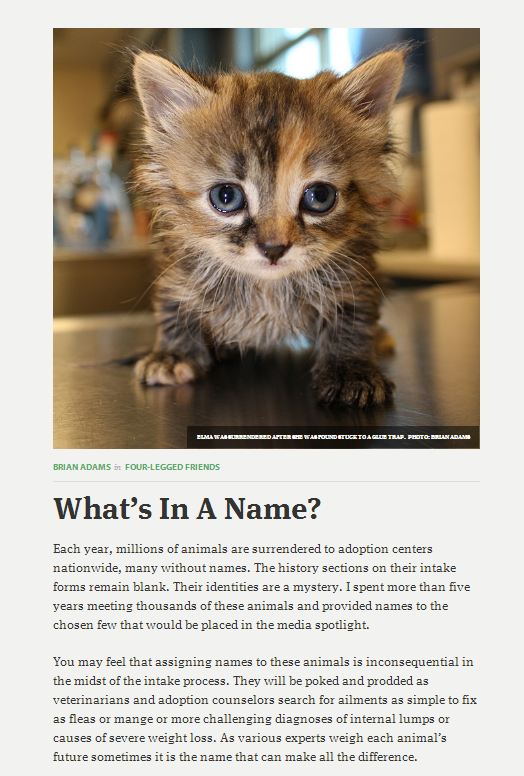
The only thing I can equate Medium to is the rebirth of individual, personal blogging – but instead of looking inside, it’s about sharing with the world. Gone are the mindless ramblings of the early 2000 blogging days, replaced with meaning, inspiration and human story telling.
6. Super Platform For Ebook Writers
Right off the bat I can say with certainty that for ebook writers, infopreneurs, authors and other important online publishers, Medium will be a hit. It’s a stunning place to get backlinks, build a following and take part in some real human exchanges.
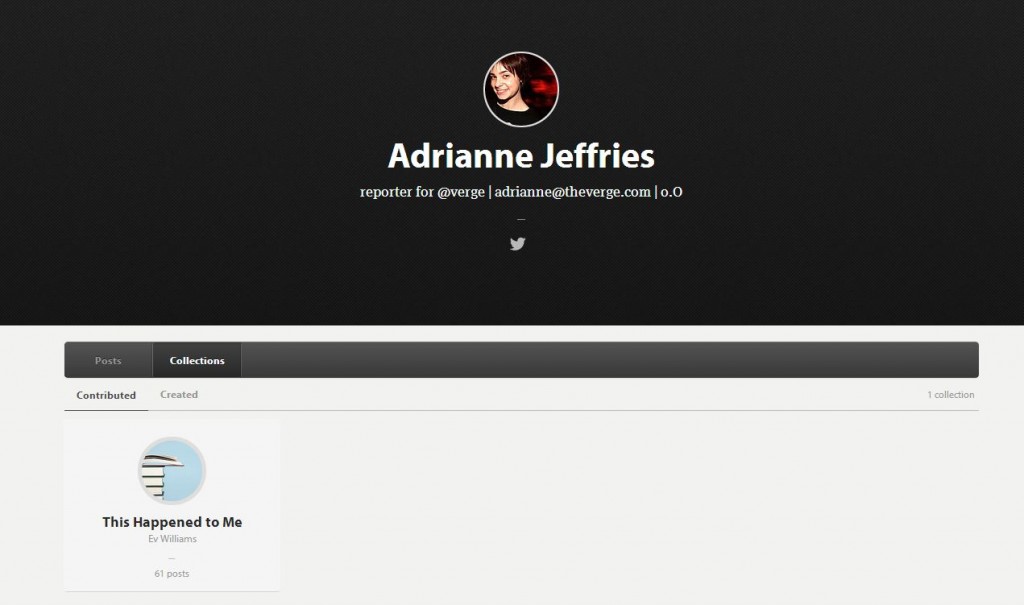
7. Love The Profile Design
Any contributors or bloggers on Medium will have their profile page that lays out their blog posts in a neat, Pinterest-like fashion.
8. Really Great Twitter-Like Handles
Do you love your Twitter handle? (@Smmu) then you’re going to love being a blogger on medium. I hate to say it but I think the Twitter creators just made Blogger, Tumblr, TypePad, Jux and Posterous Spaces second best.
Courtesy of medium.com
9. Pinterest For Bloggers
Have you ever been on Pinterest and wished that you could collect blogs like you do images? Welcome to the future! Medium lets you sort your blogs into collections. There are those that you’ve contributed too, and those you’ve liked or shared.
10. Personality Blogging
It’s nice visiting bloggers on their own websites, but having a blog here is MASSIVE for new bloggers or business bloggers. They’ll get instant exposure, a built in audience and a lot more chance to thrive in the online environment as a successful writer.
So far, we love Medium. Good going Twitter founders!
Did you like today’s post on Medium? Then share it! Do it now!
What do you think of Medium?
]]> Finding blogging ideas when you’re posting at least once a day, can be rough – even for the natural researchers among us. Luckily, with the social media rise there are more creative ways than ever to find fun or interesting topic ideas for your business blog. Today, I’m going to list ten of the hottest [...]]]>
Courtesy of profitguide.com
#1: Blogging Ideas on Alltop
Alltop.com is a news aggregator that collects all the best trending news on the internet, organizes it in order of importance, and shows it to you in handy categories. You can find a host of incredible blogging ideas, and they are all relevant and fresh.
#2: Pinterest Images Become Posts
If your business is highly active on Pinterest, why not turn a very popular trending image into a blog post for your blog. It will attract all the fans that liked the image, not to mention the image owner – and will get you additional likes, shares and comments.
#3: Facebook Page Comments
Fans will leave posts on your page that you can turn into blogging ideas. A question or statement that leads to a full and enriching post will show that you care about your fans. No interaction on Facebook? Find a question on a competitors brand page!

Courtesy of stuffedweb.com
#4: Random Hashtag Search
If you want to get the scoop on how people feel about something, come up with a hashtag, and plug it into Twitter search. Chances are, you’ll find lots and lots of people talking about that exact subject – and it makes for excellent blogging ideas.
#5: Bottlenose Real Time Search
Bottlenose.com is a great little search engine that brings you blogging ideas in real time – sourced from the latest news that is trending all over the internet. That’s no small feat, and it works like a charm.
#6: Response Blog Posts
A response blog post is a post that is written in response to someone else’s published media. Respond to a video, an image or an article by crafting a witty post from it. These blogging ideas are endless, just search for media created by niche authorities.
#7: Write Something Personal
In business, sometimes the best blogging ideas come from personal experience, or sharing something intimate with your readership. Don’t forget to think about the experiences and trials of your average day, and let that passion flow!

Courtesy of bloggingcage.com
#8: Join a Forum
Forums may seem old hat to you, but they’re still a great place to get blogging ideas. Simply join an industry related forum and ask people what their core challenges are. Then respond by crafting a series of expertly written blog posts.
#9: Break The Rules
Throw SEO to the wind, abandon sensible title suggestions and do something strange or quirky for your blog. When you break the rules that you’ve made for yourself, you might find that your community responds a lot more than usual.
#10: Blogging Ideas From Cat
If you want to do something interesting, but have no idea where to begin – use popular internet trends like cats, memes, baby animals, dancing or another hot topic and integrate it into your own post. Blogging ideas come from interesting places!
Did you like my post on blogging ideas today? Then share it with your friends, please!
Also – can you suggest another creative way to come up with blog ideas?
]]>
Courtesy of almightydad.com
#1: Blogs are Not Article Syndication Sites
A blog is supposed to have variations in content. You can’t treat it like an article marketing campaign. You’ll get bored, and so will your readers. List posts, guest posts, how-to’s, interviews, commentary posts, infographics, social opinion – use them all!
#2: Be Extremely Relevant and Time Specific
The Internet is all about relevance, so make sure that your blog posts are about hot topics. If it’s breaking news, you’ll get more hits and more readers super-fast!
#3: Short, Punchy, Epic Titles
Can you say in 5 words or less what your post is about, and why people should it? Work on this skill, it will make a huge difference. Titles sell your blog post, and that’s 30% of the struggle.
#4: Yes, Keywords are Still Important
We might be living in a post Panda, Penguin world, but keywords are still vital if you want your content to show up in the search engines. Don’t leave it out, or you’ll regret it.
#5: Find 5 Influential Friends and Publish There
Guest posting is essential for a good blog strategy. Find 5 blogs that are brilliant in your niche, and befriend the bloggers. Post on these sites often to attract new readers.
#6: Comment on Authority Blogs
Spend some time every day commenting on at least one or two authority blogs in your niche. Be yourself, use a gravatar – and add some quality insights there. Great for backlinks and building credibility.
#7: Promote User Generated Content
Your blog is a community centre, and it’s more fun to hang out there when there is more than one voice attached to the place. Get your fans to interact or create content!
#8: Find Problems, Then Solve Them
People online want simple, fast solutions to their problems. If you can create a blog post that does this, better than anyone else – you can bet that it will be a high traffic post.
#9: Feed Off Other Successful Posts
Find popular posts online, and create opinion posts about them. Add a new dimension to a heated argument, and you’ll nab more than a few readers along the way.
#10: Use Images and Videos Properly
Images should enhance your copy, and videos should be extremely relevant – if you’re going to use one. That’s why making your own video is a good idea. If that’s too time consuming, at least choose media that fits well.
Use these 10 insightful tips to build a successful blog with a large, thriving readership. It’s not impossible, it just takes time and strategy. You can do it!
Do you have a pro blogging tip to share with your SMM community? Share it with us here!
]]> Your business blog is up. What now? Find out how to rapidly expand your blog with these universal truths, and soon your blog will be unstoppable!]]>
Courtesy of pauline-bennett.com
#1: Rapid Growth Through Content Marketing
There is no such thing as posting a single blog post. Ideally, every post should be connected to a larger, ongoing content marketing strategy – so that you can really take advantage of network traffic, links and exposure. Each post for example, should come with 5 articles for the article directories, a Youtube video, a set of 10 tweets and 2 Facebook updates.
This network of content needs to be published at the same time, and each will feed traffic to the other – and eventually to the ‘core’ content, the blog post. Your network of content can be as large as you like. These networks turn 100 visits, into 25,000 visits, easily.
#2: Rapid Growth Through Social Media Syndication
Every blog post needs to be supported by a great social syndication strategy. On posting, you can have the post published to your Facebook business page via RSS Graffiti – an app. You can syndicate on the Networked Blogs network on Facebook. Create original posts for Twitter, and bookmark your blog page on 5 of the major social bookmarking sites.
#3: Rapid Growth Through Guest Posting
Guest posting is the fastest way to attract an audience – which is the biggest problem new bloggers have. They post and post, but no-one ever comments, shares, likes or bookmarks their blog. Focus on getting at least 2 guest posts out each month on popular niche related blogs, and you’ll see how fast your blog can grow!
#4: Rapid Growth Through Original Images
Bloggers these days have become a little bit lazy. They write a 300 word post, and then slap any old image in WordPress to complete the effect. A better tactic would be to create original images, either with photoshop or by camera. If you can’t do that – then at least select strategic photos that will enhance your content.
#5: Rapid Growth Through Daily Posting and Marketing
Businesses always complain that blogs don’t work – but these same businesses are the ones only posting once a week. You have to post once a day or more, to get any sort of serious result from managing a blog. And you better believe that each of these posts has to come with a marketing plan.
A blog can be the best thing that has ever happened to your business. But first you need to acknowledge these little known universal laws of blogging. Gone are the days where you can post a blog, leave it and still get interaction from fans. You have to give them a reason to return to your blog, and even better reasons to take action and comment or share.
What tactic do you find has worked best for the growth of your blog so far? Let me know!
]]> Blog commenting is not just for backlinks anymore, its a crucial part of your social strategy. Find out how to make it work for you in today's post. ]]>
Courtesy of blog.abn.org.au
Your 10 Core Blog Networks
Now that your blog is up and running, you need to gather a solid readership. One of the most effective ways to do this, is by creating a ‘blog network.’ Your network should consist of the 10 absolute best blogs in your niche. Once you’ve found them all, you’re going to concentrate on becoming one their best readers.
Dismiss what you’ve heard about blog commenting. It’s perfectly acceptable to sign off with your name, company and blog URL. But don’t think for a second that you can do this for nothing. You’ll need to really read the posts, and think of an insightful, positive comment to leave behind.
There are a number of benefits to doing this. First of all, you’re backlinking to your blog. But at the same time, you’re promoting your blog and your expertise on the ten best blogs in your niche. You’re also forming personal relationships with these blog owners, which opens up possibilities down the line. Eventually, once they know who you are, you can request guest posts from them, or contribute posts to their blog.
Subscribe to all ten of these blogs, and watch out for specific posts that will enhance your authority when you comment.
Focus on 10 blogs – you don’t need any more than that to grow.
Random Comments For Added Exposure
Assuming you are using a useful site like StumbleUpon to find fresh blogs in your niche, you can hop around the net leaving comments. These random blog comments are strictly for backlinking purposes, but that doesn’t mean you can skimp on effort! Every comment you leave is an advert for your blog or business. When people see engaging comments, they will click through to your blog.
A lot of commenting programs embed your blog URL in your name, which is then published above your comment. There are also programs that allow html embedding in the comment, or they link to your Facebook, Twitter or LinkedIn accounts. It’s a good practice to set up a separate email address that you can use to track your comments. If people respond or reply – you must continue the conversation.
This can become difficult if you use your normal business email. The more comments you post, the more likely it is that you’ll have a ton of comment spam coming your way. Keep it separate, to keep it simple.
Whatever you do, don’t use blog commenting programs. Never spam people, ever. If the blog owner is good at what they do, they’ll never publish these comments. It’s a huge waste of time. Sacrificing your reputation to get a few backlinks is black hat marketing. It won’t help you build your readership. Time and effort will!
Do you think blog commenting is a great way to connect with page owners? Speak your mind, and be heard!
]]> Is your blog missing these 4 essential components of a successful blog? If it is, you're not monetizing your blog like you should be! Better check this list!]]>
Courtesy of kisswebmaster.com
#1: Strategy Based Advertising
Many experts bloggers will try and tell you that advertising is not something a ‘real’ blog should be concerned about. After all, many bloggers are blogging to generate sales for their businesses, or to become authorities on the internet. Why then should you worry about advertising? When you start to generate traffic, you can take advantage of those numbers and use some space on your blog for advertising.
When you sign up to an ad network, you’ll be able to choose products that are relevant to your niche. Find the most enticing products, and advertise them! The money you earn from these adverts can help expand your blog. Suddenly, you’ll have an extra bit of cash to hire additional writers, or invest in videos, infographics or other multimedia features that will make your blog special.
Tip! One or two ads is enough. Do not load you pages will multiple adverts!
#2: The Humble Squeeze Page
You probably have a newsletter sign up form, but that’s about it. People won’t sign up for a newsletter unless your blog is incredible, or you give them something in return. That’s where the humble squeeze page comes in! Hire a sales writer to create a nice, high converting squeeze page for you, which prompts your readers to become part of your email list. Your list will be a lot more enticing that way.
Tip! Give away a free e-book, whitepaper or file to your readers when they sign up!
#3: Supporting Articles and Guest Blogs
Driving traffic to your blog supports all of your marketing goals. That’s why when you post a blog, you should have a basic content SEO strategy to get that post noticed. Even if it’s 5 articles on the same topic to post on article marketing sites, and 1 guest post on someone else’s blog – it could mean the difference between 300 visitors, and 6000 visitors. When you drive more people to your blog, you’ll get more comments, sign ups and social shares.
Tip! Plan your posts in advance, to make sure you have the supporting content ready when it’s time to post live!
#4: Watch Your Comments Like a Hawk
Whatever you do on your blog – you must always moderate your comments. A blog post with 3 unique comments is better than a post with 40 spammy, unrelated comments. When people see that you publish spam, they won’t take your blog seriously, and any interaction will be limited to spambots and people looking for backlinks. This is not how you promote the conversation.
Tip! Don’t know if a comment is spam? Copy and paste it into Google. Chances are, if it’s been used all over the place, it will show up in the results immediately.
Do you have any other money making blog tips for our readers? We’d love to hear what you have to say, below.
]]> How much time do you spend each day building powerful blogger relationships? Find out in today's post why this is something you need to focus on for your blog strategy. Click!]]>
courtesy of massholemommy.com
The Fast Track To Niche Credibility
You’re probably aware of 5 or more big blogging names in your field. But do they know who you are? The first step to blogging success is gaining credibility as a specific niche blogger. The only way you can do this, is by meeting, chatting to and becoming friends with other top bloggers in your field. These are real relationships that require time and effort to keep alive.
Blogging is about sharing – but more than that, it’s about connecting. Posting single blog posts might seem like you are connecting with your readership, but this is just one dimension to the total picture. In fact, you should spend the same amount of time connecting with other bloggers as you do maintaining your own blog. That way, you’ll be able to start a ‘give and take’ relationship, which almost always results in more traffic, higher readerships and widespread acclaim.
Learning From The Masters
When you become online friends with other niche bloggers, you can take advantage of these relationships. Learn from the information you discuss together, swap ideas, plan a series of posts together or offer them advertising space on your blog. Once a great relationship is in place, you can trade guest posts, work on digital products together and help keep each others social profiles alive.
Imagine making three great friends, who are also big niche bloggers in your industry. When they post on your Facebook wall, reply to your tweets or comment on your blog posts – it tells your readership that you are in fact, social. These bloggers share their credibility, authority and likeability with you. Remember the phrase – birds of feather, flock together? Chances are if their blogs are great, yours will be too – as a direct result of your friendship, and the learning opportunities you’ll come across.
Getting Into The ‘It’ Crowd
So you see, making friends through blogging is really crucial for you. It will bring you a ton of backlinks, endless business opportunities and great content on your blog. But being in the ‘it’ crowd means you have to put in the time investment. The more you comment, share, like, repost, guest post, buy and syndicate – the closer your relationship will become. Bloggers notice who their top contributors are, they really do! You need to get into the ‘it’ crowd now, for guaranteed success.
If you’ve been running your blog like an island set adrift in a sea of drowned out voices, perhaps it’s time to tune in to the ones that matter. There are a host of untold rewards waiting for the blogger that adopts a social spirit, and it can’t hurt to try. Begin by becoming a prominent member on their blog, then take the relationship further. There’s nothing more important to your overall blogging strategy than making a trustworthy friend or two.
How do you approach other bloggers, and are they willing to be friends? We want to hear your stories right here!
]]> Without blog comments you can't interact with your readership! Find out how to get more comments with today's post on blog commenting! Read it now!]]>
Courtesy of tipsotricks.com
#1: Adjusting Your Strategy
If your blog readers aren’t commenting, then you’re not speaking about the stuff they’re really interested in. Always spend time putting together your topic list, based on research and past success.
#2: Ask a Question
At the end of each blog post, ask your readers a question. Make it something relevant to the post you‘ve just written. Start a conversation by being interested in the opinions of your community.
#3: Offer an Incentive
The easiest way to get comments is to promise a prize, an award or an incentive to the reader with the best comment. The second easiest way is to offer free advice to the winner in the form of a consultation.
#4: Write About a Blog
Bloggers love to see that their posts have been read and written about on other people’s blogs. If you want an instant community of comments, do posts based on other bloggers thoughtful publications.
#5: Products and Services
Reviews are an excellent way to get your readers to offer an opinion. Grab some niche relevant products or review a company’s services on your blog. Spread it around your social sites and wait for the comments to roll in.
#6: Be Controversial
Opinions are nice, but the most entertaining opinions come from controversy. If you don’t agree with something, blog about it – and ask your readers if they agree. Nothing like a heated debate to illicit intriguing comments.
#7: Comment Control
People comment based on your post, and on what others have said about your post. If you have a lot of spam comments, that could be scaring away your readers. These are the “I love your blog, it’s so interesting” posts that don’t add to the conversation.
#8: Buy Comments
Sometimes all your readers need is a little prompt. Employ a writer to create some juicy comments for your posts – and you’ll immediately see an increase in comments from your actual community.
#9: Publish Comments Quickly
When a new reader sees that their comment has still not been moderated, it discourages them from ever commenting again. Publish them quickly and often to reward your readers.
#10: The News
There is a reason why news sites have enormous comment streams. People love to give their opinion on something current that matters in the world. Use this to your advantage by incorporating news posts into your blog strategy.
These ten tips will help your posts get more comments in the long run – use them as often as you can for the best results possible!
Do you comment on blogs? What makes you want to comment? Please leave your opinion below!
]]> Blog? Check. Readership? Not so easy. Find out how to grow a loyal readership now with these 5 excellent tactics. Read it now!]]>
Courtesy of digitallabs.com
#1: Adding Multimedia To Blogs
A blog is not only made up of words and ideas. If there’s one thing you can bet on – it’s that at least half or more of your readers prefer multimedia. Adding images, infographics, video and slideshare presentations is an excellent way to gain new readers. Figure out innovative ways to include multimedia in your posts to enhance them or create posts based on singular images or videos.
#2: Institute a Blog Outreach Program
The most successful bloggers know that a blog without an outreach program, is like a movie theatre without ticket sales. Your blog is not an island. It needs to make friends with other blogs. That means approaching experts in your field and offering to write a guest post for them. Or inviting them to write one for your blog. This will expose many readerships to your blog, and they will eventually become your readers too. If your blog isn’t good enough, get a makeover!
#3: Grow Your Facebook Fanbase
How does Facebook help your blog, you ask? A lot! Growing your Facebook fan base rapidly by adding in exciting apps and social games – can feed traffic directly to your blog in several ways. The most obvious being: adding a blog app to your page. Your blog roll will appear there and engage your Facebook fan base, turning them into long term blog readers. Viral sharing is key to great posts, and these happen most here.
#4: Use WordPress Properly
We don’t have to tell you that SEO is important – it makes the cyberworld go round. But getting a good blog readership is also about driving traffic, so it’s time to take your WordPress SEO seriously. Categories, tags and meta-data are the core of each post you publish. These keywords need to be included in your post copy, so that Google and other search engines start to like your copy as well.
#5: Advertising The Easy Way
Everything online happens because somewhere, someone has taken the time to create adverts or promotional material about it. If you want to boost those numbers, you need to invest in a display or PPC advertising campaign – preferably both. Paid media is what separates amateur blogs from pro-blogs. And once yours is bringing in the huge numbers, you can sell ad space there for money.
These five simple steps will help you attract and keep a readership of attentive fans. They’ll visit your blog more often, subscribe to your feed and become a fan of your other social media pages. That’s what you want, and with this 5 step formula – you can have it! Test it out and tell us how it goes.
What one action that you performed resulted in a boost in readership numbers for your blog? Share your experiences with our community below.
]]>